
Selling an Inherited Home in Massachusetts: Power of Sale vs. License to Sell
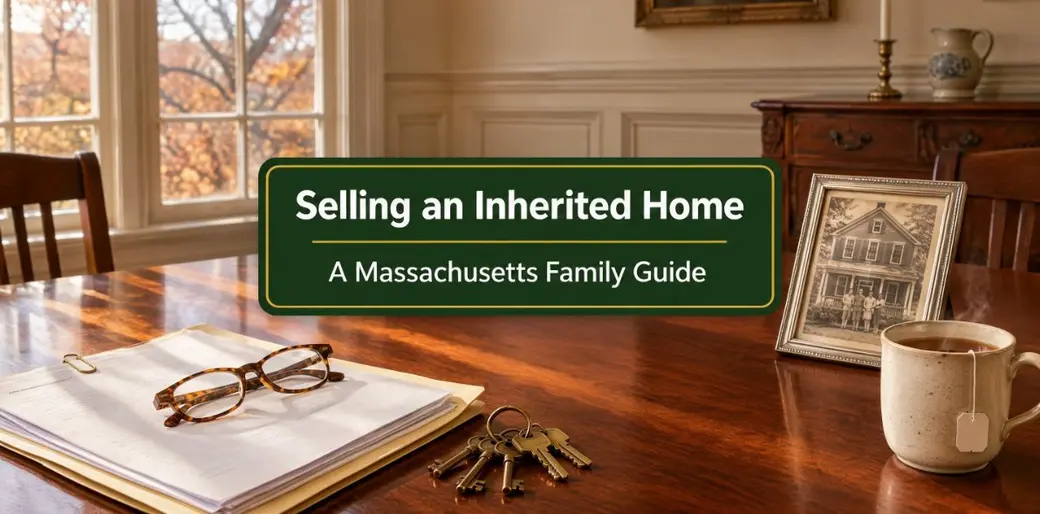
Selling an Inherited Home in Massachusetts: Power of Sale vs. License to Sell
Thanksgiving has a way of bringing up the house. Everyone is back under one roof, often the same roof they grew up under, and sooner or later someone asks the question nobody quite wants to ask: "So what are we going to do about Mom's house?"
I've sat at a lot of kitchen tables with families working through that question. Estate and probate sales are a big part of my practice, and as a Senior Real Estate Specialist (SRES®) I've seen how much smoother things go when everyone understands the process before emotions and deadlines pile up. The legal side belongs with an estate attorney. But there's one Massachusetts detail every family should understand early, because it drives the timeline more than almost anything else.
First: who actually has the authority to sell?
When a home passes through probate, the person who signs the listing agreement, the Offer to Purchase and the deed is the personal representative appointed by the Probate and Family Court. You may still hear the older terms "executor" or "administrator." Being an heir, even the oldest child or the one who lives closest, doesn't give someone authority to sell on their own.
Until a personal representative is appointed, nobody can properly sign a contract to sell the house. That's why the first call after a death is usually to an estate attorney, not to a real estate agent. I'm always glad to talk early, but the appointment comes first.
One caveat: not every home goes through probate. A house held in a trust, or owned jointly with a surviving spouse, may pass outside probate entirely. Your attorney will tell you which situation you're in.
Route one: the will includes a power of sale
Many wills give the personal representative a "power of sale," meaning the authority to sell real estate. Under the Massachusetts Uniform Probate Code, G.L. c. 190B, § 3-715, when a probated will gives the personal representative that power, the representative can sell the home to an arm's-length buyer without going back to the court for permission. That applies whether the will was probated formally or informally.
For families, this is usually the faster path. Once the representative is appointed, we can generally move ahead with preparing, pricing and listing the home on a normal timeline.
Route two: no will, or no power of sale, means a license to sell
Massachusetts did not adopt the national Uniform Probate Code's broader authority for personal representatives to sell real estate. As the comment to G.L. c. 190B, § 3-704 puts it, absent a power granted in a will, personal representatives have no authority to sell or mortgage real estate without a license from the court.
That license comes through a Petition for Sale of Real Estate (court form MPC 210) under G.L. c. 202, § 19. Based on the court's checklist, the petition generally travels with an inventory of the estate, a proposed decree, and either written assents from the interested parties or formal notice to them. In some estates, notice also goes to MassHealth's Estate Recovery Unit. If every interested person signs an assent, things tend to move faster. If someone objects or can't be located, it can take longer.
In practice, this doesn't mean you can't market the house. A common approach is to find a buyer and sign an agreement that's contingent on the court granting the license, with the price and terms included in the petition. Your attorney will decide the right sequence for your estate.
One more wrinkle worth knowing: if a probate is opened late (more than three years after the date of death) under the "late and limited" process, the court's own guidance says that personal representative can't seek a license to sell. That's another reason not to let an estate sit.
Does the house have to go through probate, or did it pass through a trust or joint ownership? Who will serve as personal representative, and how soon can they be appointed? Does the will include a power of sale? If not, will we need a license to sell, and can the heirs sign assents to speed it up? Is there anything (an estate tax filing, a MassHealth claim, a mortgage or reverse mortgage) that could affect timing or proceeds?
What the family can do while the paperwork moves
The legal steps take the time they take, but the weeks in between don't have to be wasted. A few things that help:
Protect the house, especially in winter. A vacant home on the North Shore in January is a frozen pipe waiting to happen. Keep the heat on, have someone check the property regularly, and call the homeowners insurance carrier. Many standard policies treat a vacant home differently, so ask what's required to keep coverage in force.
Gather the paperwork. The deed, recent tax bills, utility accounts, any mortgage or home equity statements, and records of major repairs. If the home was built before 1978, the buyer will receive the Massachusetts lead paint notification. If it's on a septic system, plan on a Title 5 inspection.
Start the clean-out at your own pace. Decide what family members want to keep before anyone hires an estate sale company or a junk removal crew. This is often the hardest part emotionally, and it's fine for it to take a little time.
Get a realistic sense of value. Knowing roughly what the home is worth helps the family decide whether to sell as-is, do light updates, or have one sibling buy out the others. A home value estimate is a good starting point, and our seller net proceeds calculator helps everyone see what might actually be left to divide after costs.
Selling an estate home as-is
Many families prefer to sell an estate home in its current condition, and there's a good market for it on the North Shore. Buyers looking for a house to update are active, and a well-priced estate home can draw solid interest. Browsing current North Shore listings and recent sales gives you a feel for how similar homes are priced, and for higher-end estates, our page of North Shore homes over $2 million shows where that segment sits.
Selling as-is doesn't take away a buyer's right to inspect. Since October 2025, Massachusetts regulations (760 CMR 74.00) bar sellers from requiring buyers to waive their home inspection. As-is simply means the estate isn't offering to make repairs. And while the personal representative may know little about the home's history, any question a buyer asks should be answered honestly. When in doubt, check with the estate's attorney.
Taxes are their own topic. How the home's tax basis is figured for inherited property can make a big difference in what the heirs owe. That's a question for a CPA, and I always recommend families ask it before the sale, not after.
The bottom line
If the will includes a power of sale, the path to listing is usually straightforward once a personal representative is appointed. If it doesn't, plan for a court license to sell and give yourself extra time. Either way, getting an attorney involved early, keeping the house safe and insured, and agreeing as a family on the goals will make the whole process easier. If you're sorting through this now, or expect to soon, I'd be glad to help. You can find more practical guides on our blog.
Frequently Asked Questions

Search North Shore Listings What's My Home Worth? Seller Net Proceeds Calculator First-Time Buyer Guide North Shore Relocation Guide Buyer Guides
Categories
- All Blogs (209)
- Beverly, MA (14)
- Buying a Home (102)
- Condos For Sale (8)
- Danvers, MA (2)
- Estates & Inherited Homes (4)
- Gloucester, MA (1)
- Home Ownership (50)
- Home Sellers Guide (20)
- Homes For Sale (10)
- Ipswich, MA (2)
- Jim Armstrong (1)
- Landlords (1)
- Living on the North SHore (31)
- Mortgages (17)
- Peabody, MA (2)
- Prospective Real Estate Agents (1)
- Real Estate Careers (7)
- Real Estate Market Conditions (45)
- Real Estate School (2)
- Renting (1)
- Salem, MA (15)
- Selling a home (110)
- Senior Living (2)
- Swampscott, MA (1)
Recent Posts