
Moving to Salem Massachusetts - A Complete Guide
A LOCAL GUIDE FOR HOME BUYERS
Moving to Salem, Massachusetts
An honest look at Salem's neighborhoods, commute, schools, and housing market — from a North Shore REALTOR® who knows the city block by block.
Salem, MA · Essex County · Updated 2026Salem is one of those North Shore communities that manages to be a lot of things at once: a working seaport city with a genuine year-round population, a nationally known historic destination, and a practical commuter town less than 20 miles from downtown Boston. For buyers weighing Salem against neighboring communities, the appeal usually comes down to a mix of walkable urban character, direct rail access into the city, and a housing stock that's older and more architecturally varied than what you'll find in most suburbs.
Salem isn't for everyone — the fall tourist season brings real crowds and traffic, and much of the housing stock is older with the maintenance considerations that come with that. But for buyers who want density, culture, and a train station they can walk to, it's worth a serious look.
AT A GLANCE
Three Reasons Buyers Consider Salem
Historic, Walkable Core
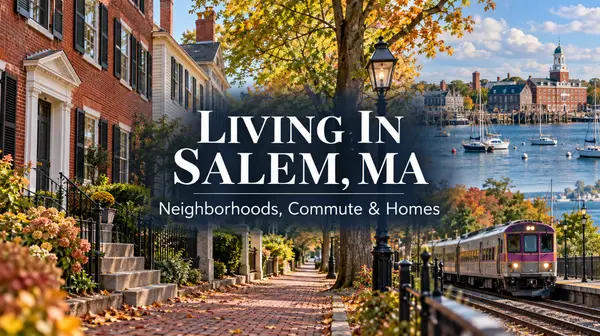
Downtown and the surrounding historic districts put restaurants, museums, shops, and the commuter rail station within walking distance for many residents — a rarity on the North Shore.
~30-Minute Rail to Boston
Salem Station sits on the MBTA Newburyport/Rockport Line with direct service to North Station, and it's the busiest Commuter Rail stop outside downtown Boston.
Real Waterfront, Fair Pricing
Salem Willows, Winter Island, and Forest River Park offer genuine coastal recreation without the premium typically attached to beach-branded towns.
LIFESTYLE
What Is It Like to Live in Salem, MA?
Salem is a small city of roughly 44,000 residents, and it feels like one. Life here is more urban than in most surrounding North Shore towns — you can walk to a coffee shop, the library, the train, and dinner without getting in a car, particularly if you live in or near downtown.
Essex Street and the surrounding downtown blend everyday errands with the city's tourism economy: independent restaurants, bookstores, and coffee shops sit alongside museums and historic sites. The Peabody Essex Museum, one of the oldest continuously operating museums in the country, anchors the cultural scene, and Salem State University adds a college-town energy to parts of the city.
For outdoor time, residents head to Salem Willows Park, a 35-acre waterfront park on Salem Neck with a fishing pier, beaches, and an old-fashioned arcade strip that's been a summer gathering spot since the 1800s. Winter Island, just beyond the Willows, offers a town-owned park, campground, and lighthouse with harbor views. Closer to the South Salem side, Forest River Park has a saltwater pool, playgrounds, and shoreline access.
Worth knowing: Salem draws close to half a million visitors each October for its Haunted Happenings festivities. Residents who live downtown should expect real crowds, parking pressure, and traffic during that stretch — worth experiencing firsthand before buying in the historic core.
COMMUTING & LOCATION
How Long Is the Commute from Salem to Boston?
This is one of Salem's strongest selling points. Salem Station, located right off Bridge Street near downtown, sits on the MBTA Commuter Rail's Newburyport/Rockport Line and runs directly into Boston's North Station. The ride takes about 30 minutes, with a standard one-way fare of $8, and it's the busiest Commuter Rail station in the entire MBTA system outside the core downtown Boston stops. Salem Station also has a 700-space parking garage for those driving in from elsewhere and transferring to the train.
By car, Salem is roughly 16 miles from downtown Boston, typically a 30- to 40-minute drive via Route 1A or Route 128/I-95 depending on traffic and time of day. Logan Airport is a comparable distance. In warmer months, a seasonal ferry also runs between Salem and Boston's Long Wharf, a popular weekend alternative.
SCHOOLS & FAMILY LIFE
Salem Schools and Family Resources
Salem is served by the Salem Public Schools district, which includes multiple elementary schools, middle schools, and Salem High School. Salem also has several charter and private school options, including Salem Academy Charter School and St. Joseph School.
As with any city this size, individual school performance varies by building, and rating sources differ in their methodology. Buyers with children should look at specific school data — MCAS results, class sizes, and program offerings — for the schools that serve the address they're considering, rather than relying on citywide averages.
Beyond the classroom, families have access to the Salem Public Library, youth sports through the city's recreation department, and community programming tied to the Salem Willows and Forest River Park facilities.
SAFETY
Is Salem, MA Safe?
Crime data for Salem is genuinely mixed, and it's worth understanding both sides rather than a single headline number. Based on the most recent FBI crime data, Salem's violent crime rate runs meaningfully below both the Massachusetts and national averages. Property crime, however, runs somewhat above the statewide average, though still below the national rate — a pattern common in small cities with a dense downtown and significant seasonal tourist traffic.
As with any community, crime patterns vary block by block, and buyers evaluating a specific address should look at current, granular data for that area rather than citywide figures alone.
NEIGHBORHOODS
What Are Salem's Main Neighborhoods?
Salem's neighborhoods are geographically compact but architecturally distinct — a big part of what makes the city interesting to explore as a buyer.
McIntire Historic District
Bordering downtown to the west, including Chestnut Street and the Federal Street area. One of the finest collections of Federal-period architecture in the country. Antique homes, strong architectural character, walkable to downtown.
Downtown Salem / The Point
The commercial and cultural core, home to Essex Street and Pickering Wharf. A mix of condos, multifamily buildings, and historic rowhouses. Closest proximity to Salem Station and the Peabody Essex Museum.
Salem Neck
A peninsula stretching to Salem Willows and Winter Island, with some of the city's best water views. Housing ranges from modest cottages to larger single-family homes, generally quieter than downtown.
South Salem
Primarily residential, with single-family homes on larger lots than downtown and easy access to Route 1A. Attracts buyers looking for a more traditional suburban layout.
Witchcraft Heights / North Salem
Centered around Witchcraft Heights Elementary School, with mid-century and postwar single-family homes. Quieter and more suburban, with convenient access to Route 128.
HOUSING & REAL ESTATE
How Expensive Is It to Live in Salem, MA?
As of mid-2026, Salem's housing market remains competitive, though pricing varies noticeably by source and by month. Zillow's home value index put the typical Salem home value at roughly $556,000 as of July 2026, up modestly year over year, while median sale prices reported by other sources have ranged from roughly $580,000 to $600,000 over the prior several months. Listing prices in August 2026 were running around $569,000, with homes typically spending several weeks on the market and a meaningful share still selling at or above asking price.
Because figures shift month to month and differ by data source and methodology, treat any single number as a snapshot rather than a guarantee — current, address-specific comparables are the only reliable way to price a particular home.
Housing Stock
Salem's housing is older and more architecturally varied than most North Shore suburbs. Buyers will find Federal-era antiques and Greek Revival homes in the McIntire District, Victorian-era triple-deckers and rowhouses closer to downtown, mid-century single-family homes in South Salem and Witchcraft Heights, and a growing number of condo conversions in historic mill and commercial buildings. Waterfront and near-waterfront homes on Salem Neck and around Pickering Wharf command a premium. New construction is limited, given the built-out nature of the city.
PROPERTY TAXES
Salem Property Taxes
Salem's FY2026 residential property tax rate is $10.78 per $1,000 of assessed value, set annually by the City Council and certified by the Massachusetts Department of Revenue. A property's assessed value — which the city uses to calculate your tax bill — is not necessarily the same as its purchase price; assessments are based on prior-year sales data and are updated annually.
As a rough point of reference, a home assessed near Salem's citywide median of roughly $551,000 would generate an annual tax bill in the neighborhood of $5,900, before any applicable exemptions. Massachusetts offers a residential exemption in some communities and other abatement options for qualifying owners; buyers should confirm current eligibility and rates directly with the Salem Assessor's Office rather than relying on estimates, since individual circumstances vary.
PRACTICAL REALITIES
Trade-Offs Worth Weighing
- Older housing stock means more buyers dealing with knob-and-tube wiring, aging roofs, or the need for updates — inspections matter here more than in newer-built towns.
- Limited inventory and competitive pricing can mean bidding situations on well-located homes, particularly in the historic districts.
- Parking can be tight in the historic downtown core and on Salem Neck, especially for homes without dedicated off-street parking.
- October tourism brings real congestion downtown; buyers considering the historic core should visit during Haunted Happenings season before committing.
- Coastal exposure on Salem Neck and near the harbor means flood insurance and flood-zone status are worth checking early for waterfront or near-waterfront properties.
None of these are dealbreakers — they're simply realities to plan around, and a big part of what a good local buyer's agent should help you think through before you write an offer.
FREQUENTLY ASKED QUESTIONS
Common Questions About Moving to Salem, MA
Is Salem, MA a good place to live?
How long is the commute from Salem to Boston?
What are Salem's main neighborhoods?
How much does it cost to buy a home in Salem, MA?
What is the property tax rate in Salem, MA?
Is Salem, MA safe?
What are Salem's schools like?
Thinking About Moving to Salem?
Salem rewards buyers who understand its neighborhoods, its older housing stock, and how pricing and inventory are actually moving right now — not just the headline numbers. Whether you're relocating from Boston, moving from elsewhere on the North Shore, or simply trying to figure out whether Salem is the right fit, I can help you understand the neighborhood differences, current homes on the market, realistic pricing, property taxes, commuting logistics, and what to watch for during the buying process.
Jim Armstrong
Armstrong Field Group · North Shore Massachusetts REALTOR® & Real Estate Broker
Categories
- All Blogs (194)
- Beverly, MA (13)
- Buying a Home (93)
- Condos For Sale (6)
- Danvers, MA (2)
- Estates & Inherited Homes (3)
- Gloucester, MA (1)
- Home Ownership (49)
- Home Sellers Guide (18)
- Homes For Sale (10)
- Ipswich, MA (2)
- Jim Armstrong (1)
- Landlords (1)
- Living on the North SHore (31)
- Mortgages (15)
- Peabody, MA (1)
- Prospective Real Estate Agents (1)
- Real Estate Careers (7)
- Real Estate Market Conditions (43)
- Real Estate School (2)
- Renting (1)
- Salem, MA (15)
- Selling a home (100)
- Senior Living (2)
- Swampscott, MA (1)
Recent Posts