
Massachusetts Has One of the Lowest Homeownership Rates in the US — What It Means for North Shore Buyers
Massachusetts Has One of the Lowest Homeownership Rates in the Country — Here's What a New Federal Analysis Means for North Shore Buyers
A new Federal Reserve Bank of Minneapolis analysis suggests the real U.S. homeownership rate is closer to 53%, not the 65.3% the Census Bureau reports. Massachusetts already runs well below the national average — and for young, first-time buyers here, the gap is even wider.
Massachusetts figure from the Federal Reserve Bank of St. Louis (FRED), 2024. The 25–34 ranking is from a Boston Globe analysis of U.S. Census data (August 2025). National figures are from the Federal Reserve Bank of Minneapolis, U.S. Census Bureau, and National Association of Realtors (July 2026).
I read a lot of housing data every week, and every so often a report comes along that makes me stop and re-read it twice. This is one of those. Economists at the Federal Reserve Bank of Minneapolis just published a new way of measuring homeownership, and the number it produces is meaningfully different from the one we've all been using for decades. Massachusetts is already one of the tougher states in the country to break into as a homeowner, and this new analysis helps explain why. If you're a first-time buyer here on the North Shore trying to make sense of "the market," this is worth understanding — because it points directly at why buying that first home has felt so much harder than it did for your parents.
Massachusetts Already Lags Behind on Homeownership
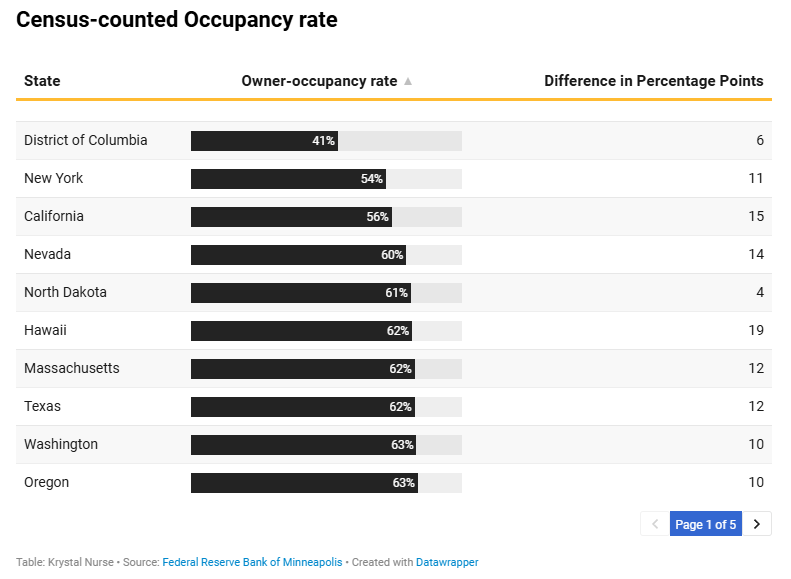
Before we even get to the new Fed measure, it's worth pausing on where Massachusetts stands today. According to Federal Reserve Bank of St. Louis data, the statewide homeownership rate was 62.9% in 2024 — several points below the national figure. It gets more striking when you narrow in on younger buyers: a Boston Globe analysis of Census data found that only about 34% of Massachusetts adults age 25 to 34 own a home, compared to a 41% national average. Only California, New York, and Hawaii rank lower for that age group. Those are exactly the years when a lot of my clients are hoping to buy their first place.
Two Different Ways to Count a Homeowner
For years, the Census Bureau has calculated the homeownership rate by looking at households, not people. If a home is owner-occupied — meaning at least one person living there owns it — the entire household counts toward the "owner" side of the ledger, roommates and all. Under that method, the 2026 national rate came in at 65.3%.
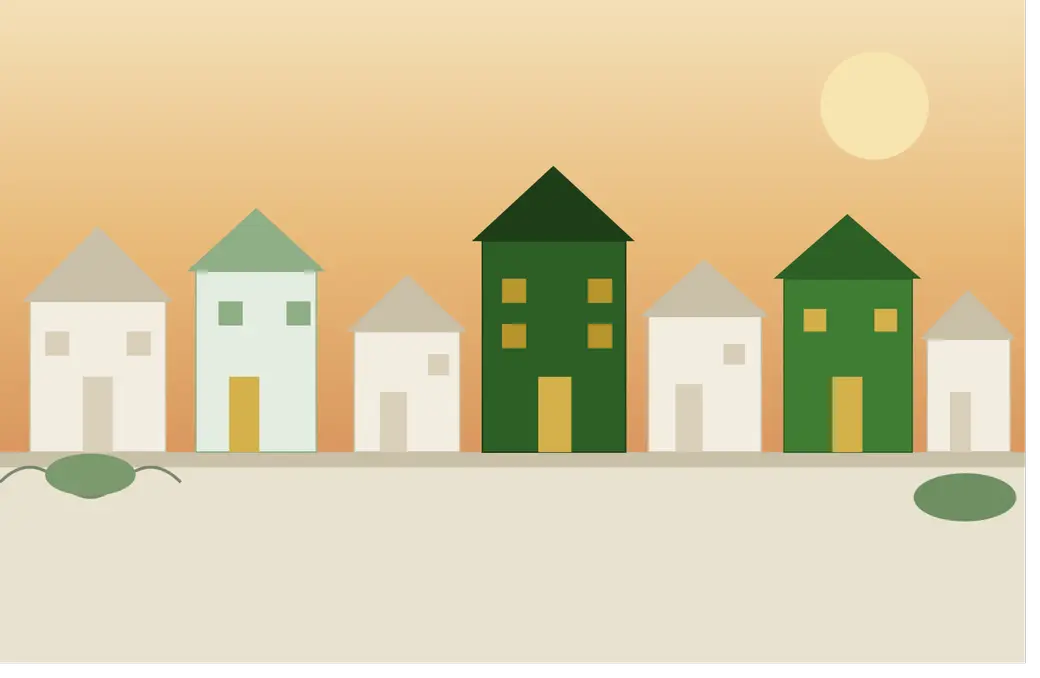
The Minneapolis Fed took a different approach. Instead of counting households, they counted people. In their example, picture a cul-de-sac with five homes and fourteen residents. Under the old method, a homeowner with a renter living in a spare room counts both people as part of an "owner" household. Under the Fed's new method — called the homeowners-to-population ratio — only the person who actually owns the home counts as an owner. The renter is counted separately, as a resident who doesn't own.
Run that math across the whole country, including people living in dorms, nursing homes, and other group settings that the old method leaves out entirely, and the rate drops to an estimated 53%. That's a 12.3 percentage point gap — large enough that an economist told reporters it could reshape how housing policy gets written going forward.
"There are more people living at home, particularly adult children living with their parents, and the statistics from the Census Bureau did not adequately capture that."
— Heather Long, Chief Economist, Navy Federal Credit UnionWhy Adult Children Living at Home Is the Real Story
That quote gets at the heart of it. A big share of the gap between these two numbers comes from adult children living with their parents — not because they want to, in most cases, but because buying that first home has become harder to pencil out. The National Association of Realtors reported that the share of first-time buyers has dropped to a record low, and that the median age of a first-time buyer has climbed to 40, roughly double what it was in 2007.
That delay carries a real cost. According to NAR's Shannon McGahn, buying a starter home at 40 instead of 30 can mean losing out on roughly $150,000 in home equity that would have accumulated over that decade. That's not an abstract statistic — it's a decade of appreciation, principal paydown, and the compounding effect of owning versus renting that a lot of families are simply missing out on right now.
What This Means If You're House-Hunting on the North Shore
I work with a lot of first-time buyers, and this data lines up with what I hear in conversations every week: people who are financially capable and want to buy, but who feel like the math keeps moving on them. If you're in that spot, the most useful thing I can tell you is that waiting for the "right moment" nationally rarely lines up with what's actually happening in your specific price range and town. Rates, inventory, and local competition shift constantly, and a conversation about your actual numbers is worth more than any headline.
If you haven't gone through a buyer consultation yet, that's a good place to start — it's free, it's no pressure, and it gives you a clear picture of where you actually stand. You can also look through first-time buyer programs and information that may be available to you.
A New Law Aimed at the Supply Side
Part of the policy response to this affordability picture is already on the books. The bipartisan 21st Century ROAD to Housing Act became federal law on July 10 after President Trump declined to sign it in protest over an unrelated bill, which allowed it to take effect automatically. Among other things, the law restricts investors from buying up large numbers of single-family homes, raises the cap on affordable housing from 15% to 20%, and creates a federal pilot program for whole-home repairs.
What the Housing Act Does
Restricts bulk investor purchases of single-family homes · Raises the affordable housing cap from 15% to 20% · Establishes a federal whole-home repair pilot program · Allows certain federal grants for new affordable housing construction
Long, the Navy Federal economist, pointed to the underlying issue directly: "This new metric underscores even more that we do not have enough starter homes in the United States. We need a massive building. We need to 'build baby build' on starter homes." Whether or not this particular law moves the needle much locally is something I'd want to watch play out over the next year or two, but it does signal that federal attention on starter-home supply is only increasing.
What It Means If You're Thinking About Selling
For sellers, especially those with starter-home-sized properties in the $500K–$800K range across Salem, Beverly, Danvers, Peabody, and the rest of the North Shore, this data is a reminder that demand for that segment isn't going away. There's a large, somewhat invisible pool of would-be buyers — many of them adult children still living with parents — who are actively trying to get into a starter home the moment their finances allow it. That's part of why well-prepared homes in accessible price points tend to move quickly here.
If you're weighing a sale and want to understand what your home could realistically bring in today's market, a straightforward market analysis is the best next step. You can see what's currently available in our area on the current listings page, or reach out for a conversation about your specific property.
The Bottom Line
Whether the "real" homeownership rate is 65% or 53%, the underlying truth doesn't change: buying a first home has gotten harder, it's taking longer, and it's costing people real money in lost equity along the way. If you're on the North Shore and trying to figure out where you stand, I'd rather have that honest conversation with you now than have you wait another year hoping the headlines shift in your favor.

Frequently Asked Questions
How does Massachusetts compare to the rest of the country on homeownership?
Massachusetts runs well below the national average. The statewide homeownership rate was 62.9% in 2024, and for adults age 25 to 34, only about 34% own a home — the fourth-lowest rate in the country, behind only California, New York, and Hawaii, according to a Boston Globe analysis of Census data.
What is the actual U.S. homeownership rate right now?
The Census Bureau reported a 65.3% homeownership rate for 2026. A new Federal Reserve Bank of Minneapolis analysis, which counts individual adults rather than households, puts the rate closer to 53%. Both figures are considered accurate — they're just measuring different things.
Why is there such a big gap between the two numbers?
The Census method counts everyone living in an owner-occupied household as part of the "owner" statistic, including renters or adult children sharing that home. The Fed's method only counts the person who actually owns the property, and it also includes people living in dorms, nursing homes, and other group settings that the Census method leaves out.
How does this affect first-time buyers on the North Shore?
It confirms what many first-time buyers already feel: homeownership is taking longer to reach, often into a buyer's late 30s or 40s. A free buyer consultation can help you understand where your specific finances and timeline stand against today's North Shore market, rather than relying on national averages alone.
What is the 21st Century ROAD to Housing Act?
It's a bipartisan federal law that took effect on July 10, 2026. It restricts investors from buying up large numbers of single-family homes, raises the affordable housing cap from 15% to 20%, and creates a federal pilot program for whole-home repairs, among other provisions.
Does delaying a home purchase really cost that much in equity?
According to the National Association of Realtors, buying a starter home at age 40 instead of 30 can mean missing out on roughly $150,000 in home equity that would have built up over that decade of ownership.
What should I do if I'm trying to buy my first home here?
Start with a real conversation about your specific numbers rather than waiting on national headlines to shift. A buyer consultation costs nothing and gives you a clear, honest picture of what's realistic for you in today's North Shore market.
Wondering Where You Actually Stand?
National numbers can only tell you so much. If you're trying to figure out whether now makes sense for you — as a first-time buyer or a seller — let's have a straightforward conversation about your specific situation on the North Shore.
Request a Free ConsultationCategories
- All Blogs (193)
- Beverly, MA (13)
- Buying a Home (92)
- Condos For Sale (6)
- Danvers, MA (2)
- Estates & Inherited Homes (3)
- Gloucester, MA (1)
- Home Ownership (49)
- Home Sellers Guide (18)
- Homes For Sale (10)
- Ipswich, MA (2)
- Jim Armstrong (1)
- Landlords (1)
- Living on the North SHore (30)
- Mortgages (15)
- Peabody, MA (1)
- Prospective Real Estate Agents (1)
- Real Estate Careers (7)
- Real Estate Market Conditions (43)
- Real Estate School (2)
- Renting (1)
- Salem, MA (14)
- Selling a home (100)
- Senior Living (2)
- Swampscott, MA (1)
Recent Posts