
Who Pays the Buyer's Agent on the North Shore Now?
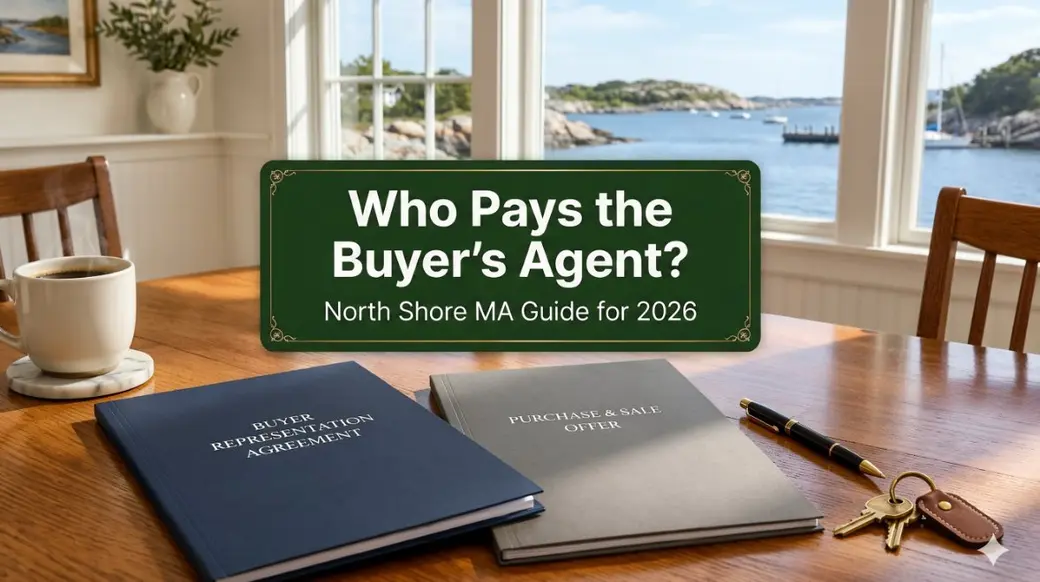
I've taught real estate agency in Massachusetts classrooms for years, and I can tell you that no single topic has generated more questions from agents and consumers since 2024 than this one: who actually pays the buyer's agent?
The short answer is that it's negotiated, and it always was. What changed is when and where that negotiation happens. Ten years ago, a North Shore buyer could walk into an open house in Beverly or Salem and never think about how their agent got paid, because the answer was printed in the MLS before anyone made an offer. That is no longer how it works. Today the number lives in paperwork you sign yourself, and if you're buying or selling here in Essex County, you should understand it before you sign anything.
What Actually Changed (and What Didn't)
Two separate events reshaped how buyer-agent pay works in Massachusetts. Neither one is a new state law.
The national NAR settlement
Starting August 17, 2024, practice changes from the National Association of REALTORS® settlement took effect across the country. Two of them matter most to buyers. First, offers of compensation to buyer agents can no longer be advertised on MLSs that follow NAR rules. Second, an agent working with you as a buyer has to have a written agreement with you before touring a home together, whether in person or by live video. That agreement has to spell out the compensation in a specific, measurable way, state clearly that fees aren't set by law and are negotiable, and cap what the agent can receive at the agreed amount.
Our own local case: Nosalek v. MLS PIN
Here on the North Shore, nearly every listing runs through MLS PIN, which is broker-owned and was never part of the national NAR deal. It had its own lawsuit, known as Nosalek. After years of back-and-forth with the court and the Department of Justice, MLS PIN removed compensation fields from its Pinergy platform effective September 2, 2025, and a federal judge in Boston granted final approval of the settlement on September 29, 2025.
The practical effect: since September 2025, there's no field in a North Shore MLS listing that tells your agent what the seller will contribute toward the buyer's side. If an agent wants to know, they pick up the phone and ask the listing agent directly.
What stayed exactly the same
Massachusetts license law didn't change. When you sit down with an agent for the first personal meeting to discuss a specific property, they're still required to hand you the state's Mandatory Licensee-Consumer Relationship Disclosure. That form explains the different roles an agent can play: seller's agent, buyer's agent, dual agent, designated agent, or facilitator. It's an information form. Signing it doesn't hire anyone and doesn't set any fee. People confuse it with a buyer agreement all the time, and they're two very different documents.
Do You Have to Sign Something Before Seeing a House?
If you want an agent to take you through a home, yes, expect a written buyer agreement first. That requirement comes from the industry and MLS practice rules that bind participating brokerages, not from a Massachusetts statute. You can still walk into a public open house on your own, or sit down with an agent to talk about how they work, without signing anything.
When an agreement is put in front of you, read it like the contract it is. Here's what I'd want any buyer to look for:
- The compensation. A percentage, a flat fee, or another clear formula. "Whatever the seller offers" isn't allowed anymore.
- The length. A short initial term is common, but some agreements run six months or a year. That's a much bigger commitment.
- The scope. An agreement limited to single-family homes in Beverly is very different from one covering all of Essex County.
- Exclusivity and termination. What happens if you find a home yourself, and whether you'd still owe a fee after the agreement ends on homes you were shown.
- The credit clause. Whether any amount the seller or listing broker pays is credited dollar for dollar against what you owe. This is the line that most directly controls your out-of-pocket cost.
All of it is negotiable. Rate, term, territory, and form are not prescribed by the settlement. A good agent will explain every line without rushing you. That's exactly what we do in our buyer consultation, before you're asked to commit to anything.
Does the Seller Still Pay the Buyer's Agent?
Often, yes. But you can't count on it, and you can't look it up anymore.
Plenty of North Shore sellers still agree to pay all or part of the buyer's agent fee. Others pay nothing. And because MLS PIN no longer displays the information, no one, including your agent, can pull a report showing what's typical this month in Peabody or Gloucester or Manchester-by-the-Sea. There's also no standard or "going rate" commission in Massachusetts. Anyone who quotes you one as the rule is oversimplifying.
What's really changed is timing. This used to be settled before you ever saw the house. Now, if you want the seller to cover your agent's fee, you ask for it in your offer, and the seller weighs that request right alongside your price, deposit, financing, inspection contingency, and closing date. In a competitive North Shore market where good single-family homes still draw multiple offers, a listing agent will look at that request in terms of the seller's bottom line. How you structure it matters.
What If the Seller Pays Less Than You Agreed to Pay Your Agent?
Then you may owe the difference. This is the part I want every buyer to slow down and understand.
Let's use a round example. Say you're buying a $750,000 single-family home in Danvers, and your buyer agreement says your broker earns 2.5%. That's $18,750. If the seller agrees to contribute 2%, or $15,000, there's a $3,750 gap that may land on you, on top of your down payment and closing costs. If the seller contributes nothing, the full $18,750 could be yours to cover. Whether and how that's paid at closing depends on your contract language, your lender's rules, and how your closing attorney handles the disclosures.
If you're buying your first home, this is one of the reasons I built our interactive first-time homebuyer guide. It helps you plan your cash to close realistically, including the possibility of paying some or all of your agent's fee. You'll also find Massachusetts assistance programs on our home buyer resources page.
Can You Add Your Agent's Fee to Your Mortgage?
In a typical purchase, no. The fee isn't added to your loan balance as a separate line on a conventional, FHA, or VA loan. It's paid by the seller's side, by you at closing, or by some combination, in a way your lender and closing attorney approve. How your loan program treats a seller-paid fee is where careful negotiating pays off:
| Loan type | How a seller-paid buyer-agent fee is treated |
|---|---|
| Conventional (Fannie Mae / Freddie Mac) | In April 2024 both agencies confirmed that buyer-agent fees paid by the seller or listing agent according to local common and customary practice are not counted toward their interested party contribution limits. Separate caps still apply to other seller credits, such as closing costs. |
| FHA | FHA stated in March 2024 that reasonable seller-paid buyer-agent fees, paid as a matter of state or local law or custom, are not treated as interested party contributions. FHA's general 6% limit still applies to other seller-paid costs. |
| VA | Since August 10, 2024, VA borrowers may pay reasonable and customary buyer-broker charges under specific conditions. VA does not treat a seller's payment of those charges as a seller concession. |
| Cash | No loan rules apply. Your buyer agreement and your offer do all the work. |
Where the Number Lives Now
In a Massachusetts purchase, the agent compensation should show up consistently in four places. It starts in your buyer agreement, which sets what you owe your broker. Next comes your Offer to Purchase (also called a Contract to Purchase on the Massachusetts Association of REALTORS® forms), where you ask the seller to pay a specific amount. That term carries forward into the Purchase and Sale Agreement, and finally into the closing instructions and Closing Disclosure, where the money actually moves and your lender signs off.
If those four don't match, someone will catch it late, usually at the worst possible time. A handshake understanding isn't enough. Get it in writing, and make sure your lender and closing attorney see it early.
What About Just Calling the Listing Agent?
You can. Just know what you're trading away.
If the listing agent represents you too, that's dual agency. Massachusetts allows it in residential sales, but only with informed written consent from both buyer and seller, and a dual agent has to stay neutral where your interests conflict with the seller's. They can't advocate for you on price or terms the way your own agent would. Many brokerages instead use designated agency, where two different agents in the same firm each represent one side.
And going without your own agent doesn't automatically save you money. The seller's listing agreement controls what the listing broker earns. Don't assume a discount will flow to you. If you want a price adjustment or credit, it has to be negotiated and written into the deal.
If You're Selling: Decide Before You List
Sellers have a real decision to make here, and it's better made calmly at the kitchen table than in a rush when the first offer comes in.
Offering to contribute toward the buyer's agent can widen your pool of buyers. Some buyers, especially first-time buyers stretching to cover a down payment on a condo, simply don't have another five figures in cash for an agent fee. Others at higher price points with strong reserves may not mind. Offering nothing keeps more on your net sheet in theory, but it can quietly cost you showings and offers you never hear about. There's no single right answer for every house in Swampscott or every condo in Salem.
What I recommend is treating it like any other cost of sale. Build it into your numbers alongside the deed excise stamps and attorney fees, compare it against what's actually selling and competing near you, and know your floor before you go live. Our seller net proceeds calculator is a good place to start, and a free home valuation will give you a realistic picture of where your home sits in today's North Shore market.
The Bottom Line
There's no Massachusetts law that says a buyer must pay their agent a set fee, and there's no law that says the seller must cover it either. Your buyer agreement decides what you owe. Your offer decides what you ask the seller to contribute. Since September 2025, none of that is visible on MLS PIN, so it comes down to clear documents and a well-structured offer.
Before you tour, read your buyer agreement for the fee and the credit clause. Before you offer, decide whether to ask the seller to pay, put a specific number in writing, and confirm with your lender and closing attorney how it will be handled. If you're relocating from out of state, where the rules and customs may look different, our North Shore Relocation Guide walks through what to expect here. And for more articles like this one, browse our buyer guides.
This article is general information, not legal or tax advice. Buyer agreements and purchase contracts are binding. Please have a Massachusetts real estate attorney review anything you're unsure about.
Frequently Asked Questions
It's negotiated. Your written buyer agreement sets what you owe your broker. You can ask the seller to pay all or part of it in your offer, and many North Shore sellers still agree to contribute. No Massachusetts law requires either the buyer or the seller to pay a set amount.
If an agent who participates in the MLS is going to tour a home with you, in person or by live video, expect to sign a written buyer agreement first. That's an industry and MLS rule, not a state statute. You can attend a public open house or meet an agent to discuss their services without signing.
You may owe some or all of it, depending on your buyer agreement. On a $750,000 purchase, a 2.5% fee is $18,750. Ask for a clause that credits any seller contribution against what you owe, and review the agreement before you sign.
Generally no. It isn't added to the loan balance on a standard conventional, FHA, or VA purchase. Seller-paid buyer-agent fees are typically excluded from concession limits under current Fannie Mae, Freddie Mac, FHA, and VA guidance, but confirm details with your lender before writing an offer.
No. MLS PIN removed compensation fields from its Pinergy platform effective September 2, 2025, as part of the Nosalek settlement. Your agent has to ask the listing agent directly.
No. It's your choice and fully negotiable. Contributing can widen your buyer pool, especially among buyers with limited cash, while offering nothing keeps more on paper but may reduce interest. Decide before you list and build it into your net proceeds estimate.

Jim has been licensed in Massachusetts since 2000 and leads the Armstrong Field Group at Aluxety Real Estate in Beverly. He grew up in Danvers, lived in Salem for more than 30 years, and now lives in North Beverly. Through Armstrong Field Real Estate School, he teaches continuing education to Massachusetts agents, including the agency and compensation rules covered in this article.
His family's roots in North Shore real estate go back to 1944, when his grandmother, Lillienne I. Field, founded Field Real Estate in Salem and became the first woman appointed to the local Board of REALTORS®. Her standard of honesty and fairness is still the one Jim works by.
Categories
- All Blogs (214)
- Beverly, MA (14)
- Buying a Home (104)
- Condos For Sale (8)
- Danvers, MA (2)
- Estates & Inherited Homes (4)
- Gloucester, MA (1)
- Home Ownership (50)
- Home Sellers Guide (20)
- Homes For Sale (10)
- Ipswich, MA (2)
- Jim Armstrong (1)
- Landlords (1)
- Living on the North SHore (31)
- Mortgages (17)
- Peabody, MA (2)
- Prospective Real Estate Agents (1)
- Real Estate Careers (7)
- Real Estate Market Conditions (46)
- Real Estate School (2)
- Renting (1)
- Salem, MA (16)
- Selling a home (115)
- Senior Living (2)
- Swampscott, MA (1)
Recent Posts