
How to Price Your Home to Sell Fast and for Top Dollar
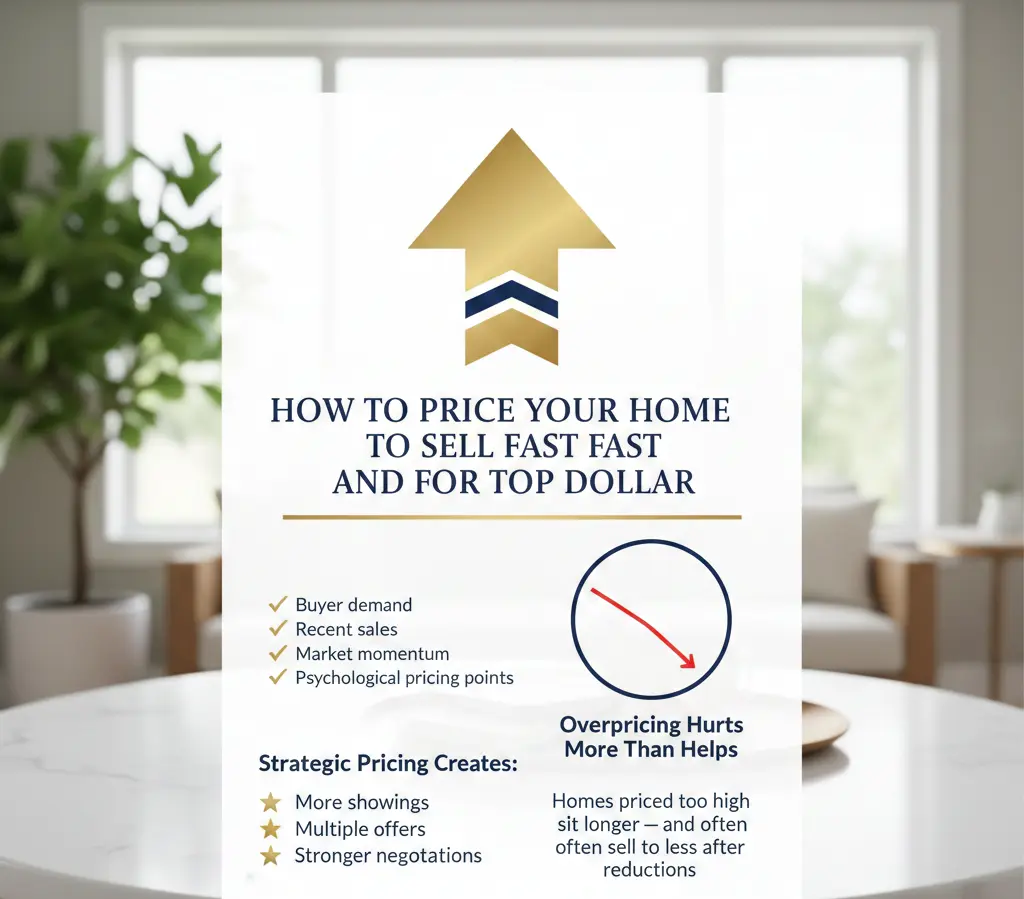
How to Price Your Home to Sell Fast (And for Top Dollar)
Many sellers believe that if they start with an "aspirational" price, they can always come down later. In reality, pricing isn't about picking the highest number you can dream up and hoping for a bite; it’s a strategic calculation.
If you want to move your property quickly without leaving money on the table, you need to master the science of the sweet spot.
The Four Pillars of Strategic Pricing
To find the right number, we look at the market through four distinct lenses:
-
Buyer Demand: Who is looking in your neighborhood right now? If inventory is low and buyer hunger is high, you have more leverage.
-
Recent Sales (Comps): What did the house down the street actually sell for? Appraisers look at closed deals, not "active" listings that are still sitting.
-
Market Momentum: Is the market heating up or cooling down? Pricing for where the market will be in 30 days is the key to a fast sale.
-
Psychological Pricing: There is a massive difference between listing at $505,000 and $499,000. Staying just under search brackets keeps your home visible to a much wider pool of buyers.
The Danger Zone: Why Overpricing Always Backfires
It sounds counterintuitive, but pricing too high often results in a lower final sale price. Here’s why:
-
The "Stale" Factor: The first 14 days are when your home has the most "buzz." If it's overpriced, you miss that initial wave of excitement.
-
The Low-Ball Invitation: When a home sits for 60+ days, buyers don't ask, "Is it nice?" they ask, "What’s wrong with it?" This invites aggressive, low-ball offers.
-
Appraisal Issues: Even if a buyer agrees to an inflated price, the bank might not. If the appraisal comes in low, the deal can collapse entirely.
What Happens When You Price Right?
Strategic pricing creates a "feeding frenzy" effect. By positioning your home at or slightly below market value, you drive higher traffic, which leads to:
-
More Showings: More feet through the door equals more emotional investment.
-
Multiple Offers: This shifts the power from the buyer to you.
-
Stronger Negotiations: When buyers know they have competition, they waive contingencies and offer better terms.
You only get one chance to make a first impression on the market. Don't chase the market down—let the market chase you.
Ready to find your home’s "Sweet Spot"?
Market conditions change weekly. Don't rely on a generic online estimate that doesn't know about your new kitchen or the quiet cul-de-sac you live on.
👉 Get a pricing strategy tailored to your specific market at ArmstrongField.com
Frequently Asked Questions About Home Pricing
1. Can’t I just price high and "see what happens"?
While tempting, this often backfires. The most serious buyers see your home in the first 14 days. If the price is too high, they won't even book a showing. By the time you drop the price, the "newness" has worn off, and buyers may wonder if there is a hidden defect in the property.
2. How do "online estimates" differ from a professional pricing strategy?
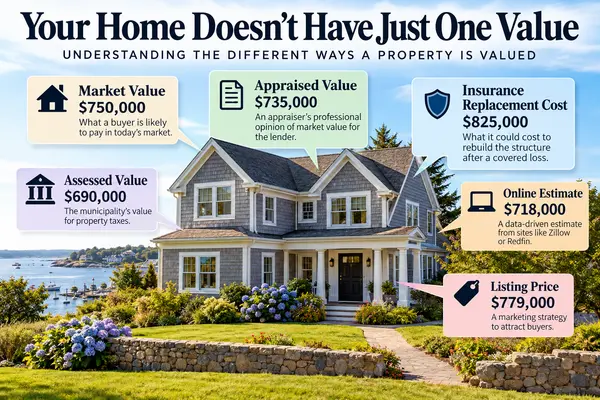
Algorithms (like Zestimates) use broad data and often can't account for specific home improvements, the "feel" of a specific street, or hyper-local market shifts. A professional strategy uses real-time local demand and professional judgment to find a price an appraiser will actually support.
3. Will a lower price always trigger a bidding war?
Not always, but it significantly increases the odds. Pricing at or slightly below market value creates a sense of "value" and "urgency" among buyers. When multiple people want the same "good deal," competition naturally drives the price upward—often higher than a high starting price would have achieved.
4. What is "Psychological Pricing"?
This is the practice of pricing just below a major "century" number. For example, listing at $499,000 instead of $505,000. Most buyer search filters are set in $25k or $50k increments; staying under the $500k mark ensures you show up in the search results of a much larger pool of buyers.
Categories
- All Blogs (193)
- Beverly, MA (13)
- Buying a Home (92)
- Condos For Sale (6)
- Danvers, MA (2)
- Estates & Inherited Homes (3)
- Gloucester, MA (1)
- Home Ownership (49)
- Home Sellers Guide (18)
- Homes For Sale (10)
- Ipswich, MA (2)
- Jim Armstrong (1)
- Landlords (1)
- Living on the North SHore (30)
- Mortgages (15)
- Peabody, MA (1)
- Prospective Real Estate Agents (1)
- Real Estate Careers (7)
- Real Estate Market Conditions (43)
- Real Estate School (2)
- Renting (1)
- Salem, MA (14)
- Selling a home (100)
- Senior Living (2)
- Swampscott, MA (1)
Recent Posts