
Smart Home Features That Actually Increase Your Property Value in 2026
Smart Home Features That Actually Increase Your Property Value in 2026
The smart home revolution has moved far beyond novelty gadgets and voice-activated light bulbs. In 2026, today's homebuyers expect a certain level of technological integration, and the right smart features can significantly boost your property's appeal and value. But here's the catch: not all smart home upgrades deliver the same return on investment.
After analyzing recent market data and speaking with appraisers and real estate agents across the North Shore and greater Massachusetts, we've identified which smart home features actually move the needle when it comes to your home's value, and which ones are just expensive toys.
The High-ROI Winners
1. Smart Security Systems ROI: 75-100%
Comprehensive security systems that include smart doorbell cameras, motion-activated exterior cameras, and integrated alarm systems consistently top the list. Buyers aren't just looking for security—they want peace of mind they can monitor from anywhere.
Systems from brands like Ring, Nest, and SimpliSafe that integrate with smartphones and offer cloud storage are particularly attractive. The ability to check on package deliveries, see who's at the door while you're at work, and receive instant alerts about unusual activity has become a must-have feature for many buyers.
Why it works: Security is a fundamental need, and the ability to check on your home remotely appeals to virtually every buyer demographic, from young families to retirees. In 2026, with property crime and package theft remaining concerns, this technology addresses real anxieties while providing genuine convenience.
2. Smart Thermostats ROI: 80-90%
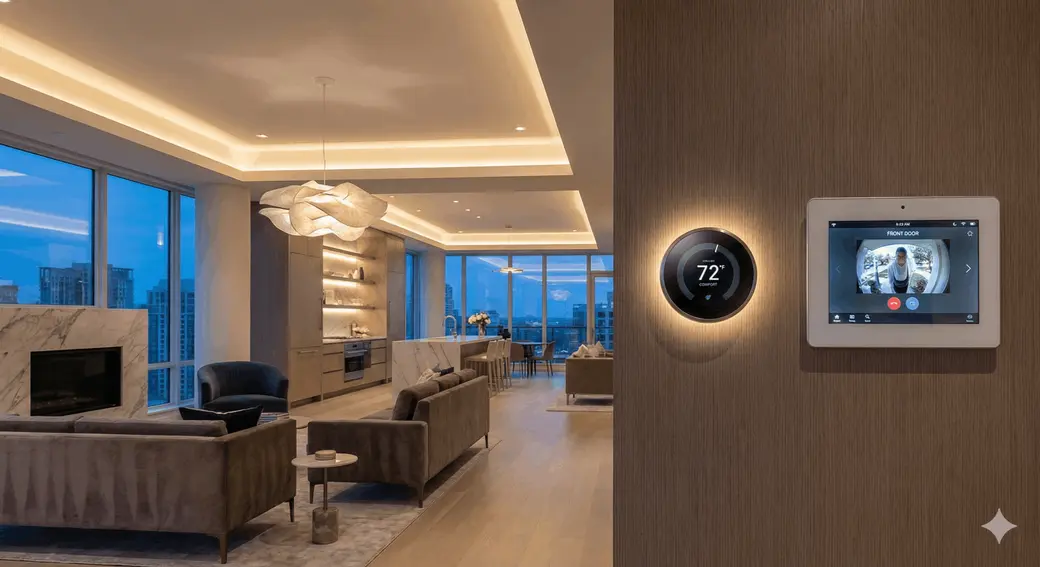
Devices like the Nest Learning Thermostat, Ecobee, and Honeywell Home have become almost expected in mid-range to luxury homes. These systems typically pay for themselves within two years through energy savings, and buyers recognize this value immediately.
What makes these particularly appealing is the combination of cost savings and environmental benefits. Buyers can see historical energy usage data and projected savings, making the value proposition concrete rather than theoretical.
Why it works: Energy efficiency is both a cost-saver and an environmental consideration. In 2026, with energy costs remaining a concern for most Massachusetts households and New England winters showing no signs of getting milder, demonstrating lower utility bills is a powerful selling point. The ability to control heating and cooling remotely also prevents wasted energy when homes are empty.
3. Smart Lighting Systems ROI: 60-75%
Whole-home lighting systems that allow for scheduling, dimming, and scene-setting have evolved from luxury to lifestyle essential. Systems that work with major platforms (Alexa, Google Home, Apple HomeKit) score highest with buyers because they integrate with technology people already own.
Modern systems go beyond simple on/off control. They allow homeowners to create "scenes" for different activities (movie night, dinner party, bedtime), schedule lights to simulate occupancy during vacations, and even sync with sunrise/sunset times for natural circadian rhythm support.
Why it works: Smart lighting enhances both convenience and ambiance. Buyers can immediately envision customizing their living spaces, and the energy efficiency aspect adds practical value. LED smart bulbs also last significantly longer than traditional bulbs, reducing maintenance costs.
4. Video Doorbell Systems ROI: 85-95%
Even as standalone features, video doorbells have become one of the most desired smart home additions. The ability to see and speak with visitors remotely, receive package delivery notifications, and monitor front door activity has universal appeal.
What's remarkable about video doorbells is their appeal across all property types and price points. Whether it's a $300,000 condo or a $2 million estate, buyers consistently cite this feature as valuable.
Why it works: Package theft concerns and general security awareness make this a no-brainer feature for most buyers. Installation is relatively simple and inexpensive, but the benefits are immediately obvious. The ability to answer the door from anywhere—whether you're upstairs, at work, or on vacation—resonates with modern lifestyles.
The Moderate-Return Investments
5. Smart Locks ROI: 50-65%
Keyless entry systems appeal to tech-savvy buyers and those who frequently deal with contractors, cleaners, or short-term rentals. The ability to grant temporary access codes, monitor who enters and exits, and never worry about lost keys is genuinely convenient.
However, some buyers remain skeptical about digital security and battery dependence. Concerns about locks failing during power outages or battery deaths, while often unfounded with modern systems that include backup power and traditional key access, still impact perceived value.
Why the mixed response: While convenient, smart locks haven't achieved the same universal acceptance as other smart features. Some buyers worry about reliability or prefer the simplicity and familiarity of traditional keys. The ROI varies significantly based on the buyer demographic—tech-forward buyers love them, while traditional buyers may see them as unnecessary complexity.
6. Smart Garage Door Openers ROI: 45-60%
The ability to open, close, and monitor your garage door remotely is genuinely useful, especially in areas with harsh winter weather or when you can't remember if you closed the door when leaving. However, it's not typically a make-or-break feature for most buyers.
The verdict: Nice to have, especially in markets with harsh weather or high property crime, but unlikely to significantly increase your asking price. It's more of a "checkmark" feature—its absence won't hurt you, but its presence won't dramatically help either.
7. Whole-Home Automation Hubs ROI: 40-70%
Systems like Control4, Savant, or Crestron that integrate everything from lighting to climate to entertainment to window shades can be impressive showpieces. However, ROI varies dramatically based on buyer sophistication and market expectations.
In luxury markets where high-end finishes are expected, these systems can be selling points. In mainstream markets, they may be viewed as overly complex or a white elephant that the new owner will need to learn and maintain.
The challenge: These systems can be complex, expensive to modify, and may not align with a new buyer's preferred ecosystem. A buyer who uses all Apple products may not want to deal with a Control4 system, for example. Additionally, these proprietary systems often require professional programming for changes, which feels limiting compared to DIY-friendly smart home platforms.
The Questionable Investments
8. Smart Appliances ROI: 20-40%
Refrigerators with touchscreens, WiFi-enabled ovens, and app-controlled washing machines generate more "cool factor" than actual value. These appliances cost significantly more than standard models—often $500 to $2,000 more—but most appraisers don't assign premium value to connectivity features.
The core problem is that the "smart" features often feel gimmicky. Do you really need your refrigerator to show you family photos when a magnet works just fine? Does preheating your oven from your smartphone save meaningful time compared to turning it on when you get home?
Why they disappoint: Buyers recognize that smart appliances have shorter lifespans than their analog counterparts, face faster obsolescence as technology evolves, and may require costly repairs from specialized technicians. The connectivity features often feel like solutions in search of problems rather than genuinely useful innovations.
9. Smart Mirrors and Bathroom Tech ROI: 15-30%
Mirrors with integrated displays, smart toilets with heated seats and bidet functions, or shower systems with digital temperature controls and programmable settings can wow guests during showings. However, they rarely influence purchase decisions proportionally to their cost.
These features often cost thousands of dollars to install but add minimal appraisal value. A $3,000 smart mirror might add $500-$900 to your home's value at best.
The reality: These features appeal to a narrow buyer segment and can actually make some buyers uncomfortable or skeptical about maintenance and repair costs. Many buyers wonder what happens when the technology fails—are they stuck replacing an entire mirror or toilet because of a software glitch?
10. Smart Sprinkler Systems ROI: 30-50%
Automated irrigation systems that adjust based on weather forecasts, soil moisture levels, and plant types make sense in drought-prone regions. Elsewhere, they're viewed as a minor convenience at best.
In Massachusetts and the North Shore, where we receive adequate rainfall most of the year, buyers are less impressed by this technology than they might be in California or Arizona.
Regional consideration: ROI is heavily geography-dependent. In arid climates where water conservation matters and landscaping requires significant irrigation, this could be a genuine selling point. In rainy New England, it's largely irrelevant except for properties with extensive landscaping or athletic fields.
The 2026 Reality Check
The gap between "impressive technology" and "valuable technology" is wider than most sellers realize. Buyers in 2026 have become sophisticated enough to distinguish between features that solve real problems and features that exist primarily for novelty value.
The winners are technologies that address fundamental needs: security, energy efficiency, and convenience. The losers are technologies that add complexity without proportional benefit.
Making Smart Choices About Smart Home Investments
Before you invest in smart home technology to increase your home's value, consider these strategic guidelines:
Focus on Security and Efficiency First
Features that save money or provide safety consistently deliver the best returns. Start with a smart security system and smart thermostat before considering anything else. These two investments alone can recover 75-90% of their cost in added home value, plus provide genuine utility while you still own the home.
Stick with Major Ecosystems
Buyers want systems that work with platforms they already use. Obscure or proprietary systems can actually decrease appeal because buyers fear being locked into an unfamiliar ecosystem or having to replace everything.
In 2026, the big three ecosystems are Amazon Alexa, Google Home, and Apple HomeKit. If your smart home devices work with at least one of these, you're in good shape. If they require a proprietary app and don't integrate with anything else, that's a red flag for buyers.
Professional Installation Matters
DIY installations may save money upfront, but professionally installed systems give buyers confidence in reliability and provide documentation for home inspections. This is especially important for systems that involve electrical work or home security.
When you can hand buyers a folder with professional installation receipts, warranty information, and system documentation, it transforms a "cool feature" into a "legitimate home system" in their minds.
Document Energy Savings
If you've installed smart thermostats or efficient smart lighting, keep utility bills that demonstrate the savings. Real data is far more persuasive than theoretical benefits.
Being able to show a buyer that your heating costs dropped from $3,200 per year to $2,100 per year after installing a smart thermostat is infinitely more valuable than saying "this should save you money."
Consider Your Market
A $10,000 whole-home automation system might be expected in a $2 million home but could be seen as odd in a $300,000 starter home. Match your smart home investments to your property's price point and target buyer demographic.
In general, smart home technology should represent 1-2% of your home's value at most. Going beyond that often results in over-improvement with minimal ROI.
Don't Over-Automate
There's a sweet spot between "dated" and "overwhelming." Most buyers want core smart features but don't want to feel like they need an engineering degree to adjust the lighting or change the temperature.
If your smart home system requires a 30-minute tutorial just to explain basic functions, you've probably gone too far. The best smart home features are intuitive enough that anyone can use them within minutes.
The 2026 Smart Home Baseline
In today's market, certain smart features have moved from "nice to have" to "expected" in homes priced above the median in most markets:
- Smart doorbell with video capability
- Programmable or learning smart thermostat
- Some form of smart lighting (at minimum in key areas like entry, kitchen, master bedroom)
- Basic security system with remote monitoring capability
- Smart smoke and carbon monoxide detectors
If you're selling a home without these features in 2026, you're likely leaving money on the table or narrowing your buyer pool. Conversely, if you're buying, the absence of these features gives you negotiating leverage or a clear roadmap for improvements.
What About Future-Proofing?
One question sellers often ask is whether they should invest in cutting-edge technology to "future-proof" their homes. The answer is nuanced.
The problem with future-proofing through technology is that "the future" in tech terms is about 18-24 months away. Technology that seems cutting-edge today will be standard tomorrow and obsolete the day after. The smart home hub you install today might not even be supported by its manufacturer in three years.
Instead of chasing the newest technology, focus on infrastructure that supports flexibility:
- Robust WiFi infrastructure with mesh networking or multiple access points ensures your home can handle whatever smart devices buyers want to add
- Ample electrical outlets in logical locations reduce the need for adapters and extension cords
- Ethernet wiring to key rooms provides backbone for reliable smart home operation
- Dedicated spaces for home networking equipment keep technology organized and accessible
These infrastructure improvements age well because they support whatever technology comes next, rather than locking you into today's solutions.
The Bottom Line
Smart home technology can absolutely increase your property value, but only when you invest strategically. The key is focusing on features that offer tangible benefits—security, energy savings, and genuine convenience—rather than flashy gadgets that wow for five minutes but don't solve real problems.
The smartest smart home investment isn't the most cutting-edge technology; it's the technology that makes daily life genuinely better for the widest range of potential buyers. In 2026, that means prioritizing security, efficiency, and seamless integration over novelty and complexity.
Before making any significant smart home investment, ask yourself: "Would this feature make me choose this house over an identical one without it?" If the answer is yes, you're probably making a wise investment. If you're not sure, your potential buyers probably won't be either.
Remember: The goal isn't to create a showcase for technology. The goal is to create a home that's more secure, more efficient, and more comfortable—with technology serving those ends rather than being an end in itself.
Considering Selling Your North Shore Home?
Understanding which improvements add value and which don't is crucial to maximizing your return. We can help you evaluate your home's current features and identify the most strategic upgrades for your specific property and market.
Get Your Free Home ValuationWe'll provide a detailed analysis of your home's value and recommendations for smart improvements that will resonate with today's buyers.
Categories
- All Blogs (191)
- Beverly, MA (12)
- Buying a Home (91)
- Condos For Sale (6)
- Danvers, MA (2)
- Estates & Inherited Homes (3)
- Gloucester, MA (1)
- Home Ownership (49)
- Home Sellers Guide (18)
- Homes For Sale (10)
- Ipswich, MA (2)
- Jim Armstrong (1)
- Landlords (1)
- Living on the North SHore (30)
- Mortgages (15)
- Peabody, MA (1)
- Prospective Real Estate Agents (1)
- Real Estate Careers (7)
- Real Estate Market Conditions (42)
- Real Estate School (2)
- Renting (1)
- Salem, MA (14)
- Selling a home (98)
- Senior Living (2)
- Swampscott, MA (1)
Recent Posts